
Important: If you or a family member has a sudden change in swallowing ability, especially after a stroke, seek emergency medical care immediately before arranging therapy.
Dysphagia (Swallowing Rehabilitation)
Comprehensive assessment and therapy for safe, efficient swallowing in adults with stroke, Parkinson's, head & neck cancer, and other neurological and structural conditions — serving Rawalpindi, Askari, DHA, and Islamabad.
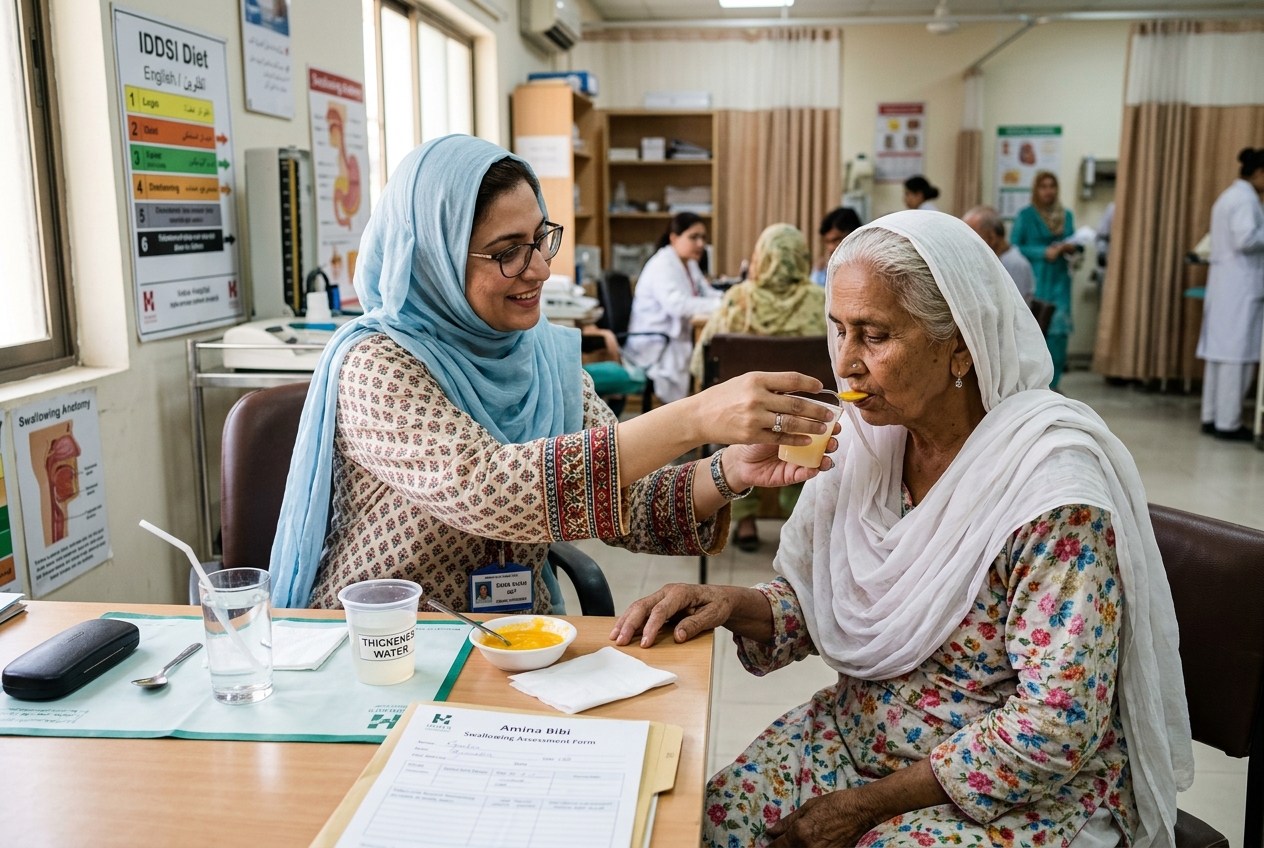
The Three Phases of Swallowing
Oral Phase
Chewing food and preparing it for swallowing. Difficulties here include poor chewing, food falling out of the mouth, or inability to form a proper bolus.
Pharyngeal Phase
Triggering the swallow reflex and moving food through the throat safely. This is the most clinically significant phase — aspiration (food/liquid entering the airway) can cause pneumonia.
Oesophageal Phase
Moving food from the throat to the stomach. Oesophageal dysphagia is typically managed medically (gastroenterology) but SLPs play a key role in identification and referral.
Signs of Swallowing Difficulty
- Coughing or choking during or immediately after eating and drinking
- Sensation of food 'getting stuck' in the throat or chest
- Wet or gurgling voice quality after eating
- Recurrent chest infections or aspiration pneumonia
- Drooling or difficulty keeping food and liquid in the mouth
- Weight loss or dehydration due to reduced oral intake
- Avoidance of eating in social settings
How We Assess & Treat Dysphagia
- Clinical Swallowing Examination (CSE) — bedside assessment of all swallowing phases
- Referral for instrumental assessment (VFSS/MBSS, FEES) where indicated
- Diet texture and liquid consistency modification using IDDSI international framework
- Swallowing exercises: Shaker Exercise, Mendelsohn Manoeuvre, Effortful Swallow
- Thermal-tactile stimulation and sensory approaches for delayed swallow reflex
- Enteral feeding (NG/PEG tube) transitional oral feeding programmes
- Caregiver training for safe feeding techniques at home
- Liaison with physicians, dietitians, and physiotherapists
Common Questions About Dysphagia
Is difficulty swallowing dangerous?
Yes. Dysphagia can lead to aspiration — food or liquid entering the airway instead of the oesophagus — which causes aspiration pneumonia, a potentially life-threatening condition. Silent aspiration (no coughing) is particularly dangerous. Assessment by an SLP is essential.
What is a Clinical Swallowing Examination?
A CSE is a structured bedside assessment performed by a licensed SLP. We observe the patient eating and drinking various food and liquid textures, evaluate oral-motor function, voice quality, and use clinical reasoning to determine aspiration risk and management.
Can swallowing therapy help after a stroke?
Significantly yes. Post-stroke dysphagia often improves with targeted swallowing rehabilitation. Studies show that early, intensive swallowing therapy reduces aspiration risk, improves nutritional intake, and shortens hospital stays.
Do you provide diet texture modification advice?
Yes. We use the International Dysphagia Diet Standardisation Initiative (IDDSI) framework to recommend appropriate food textures and liquid consistencies for safe oral feeding, with written guidance for caregivers and cooks.
Safe Swallowing Is a Right — Let Us Help
Serving Askari, DHA, Bahria Town, Khawaja Corporation, and central Rawalpindi & Islamabad.