
Neurodegenerative Communication & Swallowing Management
Long-term, compassionate communication and swallowing support for Parkinson's disease, Dementia, Alzheimer's, ALS, and related progressive neurological conditions — with LSVT LOUD available in Rawalpindi.
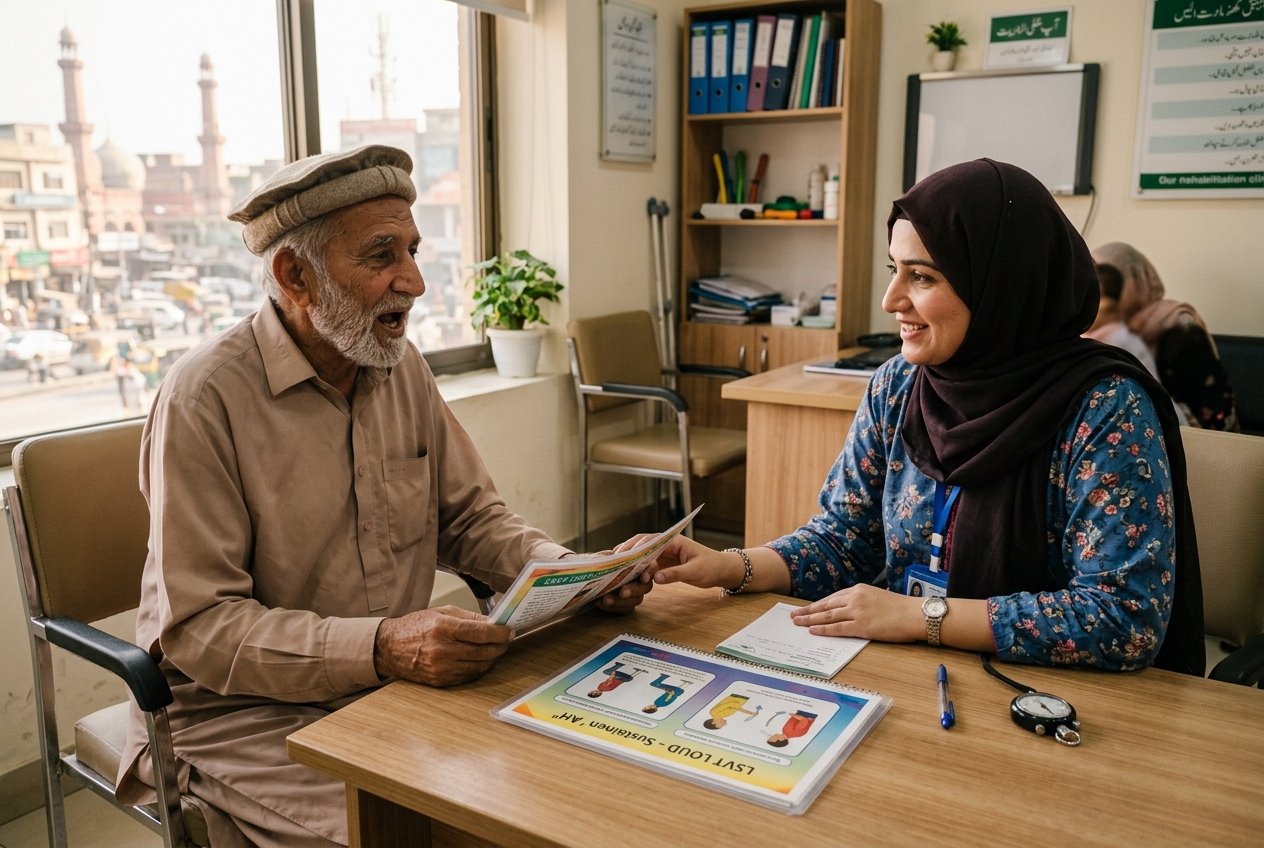
Neurodegenerative Conditions & Communication
Parkinson's Disease
Parkinson's affects speech through hypokinetic dysarthria — a soft, monotone, breathy, or rapid voice that becomes increasingly difficult to understand. LSVT LOUD, the gold-standard intensive programme, is offered at our clinic and produces robust, lasting improvement in vocal loudness and intelligibility.
Dementia & Alzheimer's Disease
As dementia progresses, communication changes across all stages — from word-finding difficulties in early stages to severely reduced verbal output in late stages. SLPs support meaningful communication at every stage and train caregivers in effective communication strategies.
Progressive Neurological Conditions
ALS (MND), Multiple System Atrophy (MSA), Progressive Supranuclear Palsy (PSP), and Huntington's Disease all affect communication and swallowing. We provide proactive, individualised management including AAC planning and swallowing safety.
LSVT LOUD for Parkinson's Disease
LSVT LOUD (Lee Silverman Voice Treatment) is the gold-standard, FDA-backed intensive voice treatment for Parkinson's disease. It is one of the most thoroughly researched treatments in all of Speech-Language Pathology — with evidence from over 20 published clinical trials.
Key Facts About LSVT LOUD:
- LSVT LOUD is delivered in 16 sessions over 4 weeks — intensive but highly effective
- Research shows improvements in vocal loudness lasting 2+ years post-treatment
- Improved loudness generalises to improved clarity and facial expression
- Can be started at any stage of Parkinson's disease
- Available at our Rawalpindi clinic — one of very few centres in the twin cities offering this protocol
What Our Clinicians Do
- LSVT LOUD: intensive Parkinson's voice treatment (16 sessions/4 weeks)
- Parkinson's swallowing safety assessment and diet modification
- Cognitive-communication strategies for dementia — all stages
- Caregiver training in communication facilitation techniques
- AAC planning for individuals approaching minimal verbal output
- Dementia-friendly communication environment guidance
- Dysphagia management for progressive neurological conditions
- Regular reviews and programme adjustments as the condition evolves
Common Questions
My family member has Parkinson's and their voice is very soft — can therapy help?
Yes. LSVT LOUD is specifically designed for Parkinson's-related hypophonia (soft voice) and has the most robust evidence base of any Parkinson's speech treatment. Patients report that family members can hear them again, they need to repeat themselves less, and they feel more engaged in conversations.
Is it too late to start therapy if the condition is advanced?
Even in advanced neurodegeneration, SLP intervention has a meaningful role — whether it's safe swallowing management, maintaining communication through AAC, or training caregivers to facilitate communication. We meet patients and families where they are.
My parent has dementia — what can a speech therapist do?
Quite a lot. SLPs in dementia care: identify the current communication stage and adjust expectations, teach caregivers effective communication techniques (simplified language, visual cues, yes/no questioning), manage swallowing safety as the disease progresses, and help maintain the person's dignity and quality of life through communication.
What is ALS/MND and how does an SLP help?
ALS (Amyotrophic Lateral Sclerosis) / Motor Neurone Disease is a progressive neurological condition affecting the muscles of speech and swallowing. Our SLPs work proactively — assessing speech and swallowing changes, planning AAC before verbal communication deteriorates, and managing safe eating as dysphagia progresses.
Compassionate Care for Every Stage
Serving families from Askari, DHA, Bahria Town, Gulshan Abad, Khawaja Corporation, and central Rawalpindi & Islamabad.